Research updated 28 October 2026 · Knitwear material development
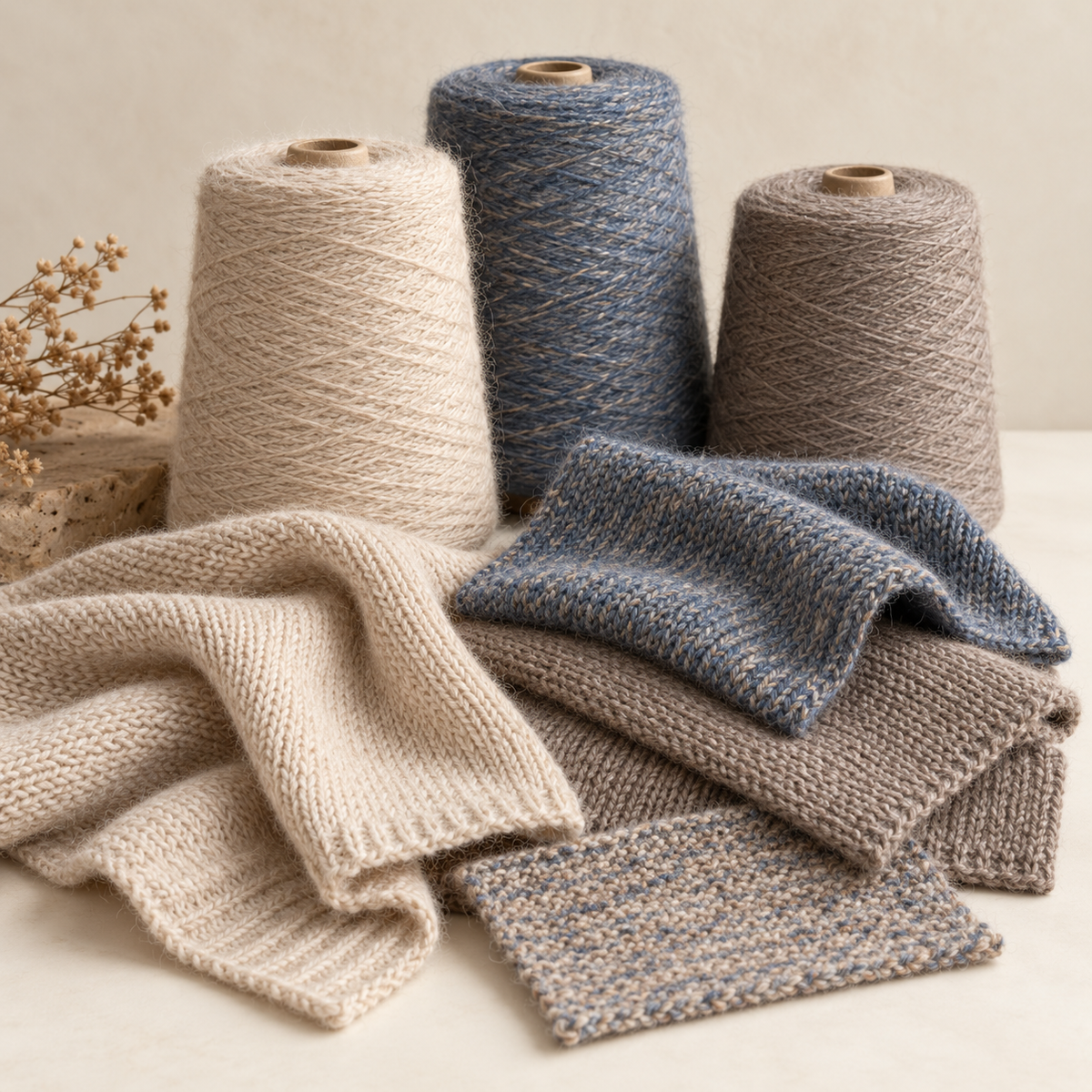
The cover is an editorial textile study. Product photographs below show the actual catalogue references discussed in this guide.
Alpaca yarn development is exploring both blend partners and colour treatments. In its 24 June 2026 AW27/28 release, Pecci Filati highlighted baby alpaca with organic cotton and an expanded choice of solid and pre-dyed colours. Those developments concern Pecci’s collection; they offer a reason to compare specifications carefully when building your own knitwear range. Read the manufacturer’s collection announcement.
For a buyer, “alpaca blend” starts a conversation. The full formula, yarn count and selected colour treatment determine which sample you are discussing. A useful approval record keeps those details together from the first colour card to the production quotation.
Choose the percentage for a defined garment brief
Start by deciding what the garment needs: perhaps a softly outlined cardigan, a compact vest or a textured collar. Set the intended appearance, fabric mass, fit and care process. Include any minimum animal-fibre content in the brief before shortlisting yarns.
Then read every percentage. A blend with a small alpaca component and a blend led by alpaca represent different material choices. Neither percentage alone tells you the finished panel’s handle or suitability. Compare complete yarns in the construction you intend to produce, and discuss the cost against the fabric you approve.
The Alpaca Owners Association’s processing guide, reviewed in September 2026, recommends considering fibre grade, uniformity and staple length alongside the intended product. It also advises retaining accurate blend records. These are useful questions when a project needs a specific alpaca grade or documented material identity. See the association’s processing guidance.
Read one actual five-fibre blend in full
Y100-000050 is listed at 1/14NM with 8% alpaca, 15% wool, 26% nylon, 48% acrylic and 3% spandex. Alpaca and wool together account for 23% of this formula. Keep the complete composition on your sample sheet rather than describing it only by its alpaca component.
Its six card photographs show wrapped yarn with a fuzzy surface. That visual reference helps you shortlist shades and surface directions. Use the actual yarn in a knitted trial to evaluate the resulting fabric. If your brief includes a particular fibre fineness, origin or supporting document, ask us to confirm it for the selected reference.

Keep melange and hank-dyed selections separate
For Y100-000050, the card legend identifies T as a melange shade and Y as a hank-dyed shade. The photographed hank-dyed references carry a YD suffix. Retain the suffix actually printed beside the yarn you choose, such as 1455YD, rather than shortening it to a number.
The card notes that hank-dyed colours may differ from melange shades. A similar colour name is therefore a starting point for comparison. Confirm the exact reference and treatment, then assess the physical yarns beside one another if the design depends on a match.
| Selection point | Melange references in this set | Hank-dyed references in this set |
|---|---|---|
| Code to preserve | Full number with T suffix | Full number with YD suffix |
| Card example | 1401T on the neutral-shade card | 1455YD on the hank-dyed card |
| Colour decision | Review the mixed-tone appearance in the selected reference | Review the selected dyed reference independently |
| Approval record | Product, blend, count, complete code and physical trial | The same details, including the confirmed hank-dyed selection |
Ask about the dyeing route without assuming a recipe
Manufacturers can specify the dyeing stage separately from composition. Inca Tops, for example, lists a tops dyeing method for its Andes Tweed alpaca–Merino product, while its Trilogy alpaca–mohair–silk product lists hank dyeing. These are two specific manufacturer references. Their processing instructions belong to those yarns. View the Andes Tweed specification; view the Trilogy specification.
For your own shortlist, ask which colour treatment applies, whether the yarn arrives ready for the intended knitting setup, and what finishing guidance accompanies it. Keep any agreed changes to washing, brushing or relaxation with the swatch record so the result can be reproduced.

Choose shades that answer different development questions
Build a small, purposeful shortlist. A pale neutral lets the team review the surface and stitch outline. A dark reference supports a different colour-approval decision. If the design uses contrasting trims or panels, include those actual colours in the trial rather than judging each shade on its own.
When comparing T and YD options, keep the garment brief consistent and record any necessary setting changes. Compare the colour character, visible fibres, coverage and seam appearance. Decide which treatment suits the design before extending the selection across an entire collection.

Use a repeatable sample-to-approval workflow
1. Confirm the material identity
Send the product reference, full formula, printed count and complete shade code with the card image. Ask about any specification detail required by your brief before placing the sample order.
2. Label before knitting
Attach the confirmed T or YD reference to the yarn and trial record. Note the machine, gauge, stitch structure, number of ends and relevant settings. Retain lot details when supplied.
3. Review the finished fabric
Apply the agreed finishing and care process. Compare handle, dimensions, surface and colour under consistent viewing conditions. Include a seam and the intended edge or trim. Keep an untreated reference if it helps the team understand the finishing change.
4. Define what bulk must match
Retain the approved physical swatch and confirmed specification. Agree the shade, treatment, quantity per colour and any required test evidence in the bulk quotation. Check the production sample against that record before approving the order.

Frequently asked questions
Does an alpaca-blend name tell me the percentage or grade?
Read the full formula and ask about the grade if it matters to your brief. Y100-000050 lists 8% alpaca. Confirm any more specific fibre requirement separately before ordering.
Can I substitute a T shade with a similarly named YD shade?
Confirm the substitution with customer service and review the physical samples. The card distinguishes the treatments and notes that their colours may differ.
Does 1/14NM determine the knitting-machine gauge?
Use the printed count to identify the yarn, then agree the setup with your knitting team. Structure, settings and the intended fabric need a trial on the proposed equipment.
How do I arrange a sample and later bulk supply?
Contact us first to confirm the specification, full shade code and availability. One confirmed 1kg sample costs US$19.90. Enter the agreed details in the Colour reference field and repeat them in the order note, retaining suffixes and leading zeros. After sample approval, request a separate bulk quotation based on quantity.
Explore Y100-000050 or discuss the blend and shade with le Charchell.
Sources and dates
- Pecci Filati: AW27/28 collection release — 24 June 2026.
- Alpaca Owners Association: Alpaca Fiber Processing — last reviewed September 2026.
- Inca Tops: Andes Tweed Woolen Spun 1/8 — undated technical product page, accessed 28 October 2026.
- Inca Tops: Trilogy — undated technical product page, accessed 28 October 2026.