Updated 30 October 2026 · Wholesale yarn sourcing and knitwear development
A core-spun yarn enquiry needs three separate decisions: the fibre formula, the yarn construction and the fabric you want to knit. A colour card helps your team start that conversation. A confirmed physical sample gives you something to evaluate on your own machine before committing to a wholesale order.
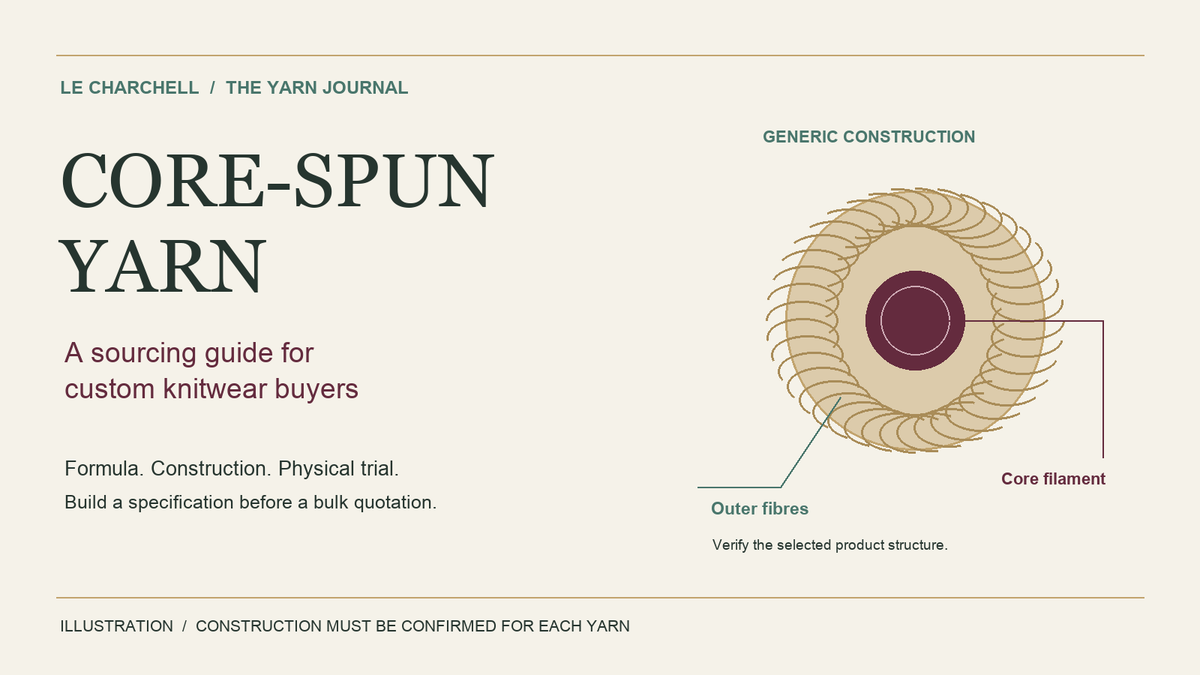
This guide focuses on viscose- and rayon-blend core-spun references used in custom knitwear sourcing. It explains which details to confirm, how to read shared colour cards and what to record during a knitting trial. The examples come from le Charchell's photographed catalogue; the cover is a generic construction illustration.
What does core-spun mean?
Core-spun describes a yarn structure. CottonWorks explains the basic construction as a central yarn, commonly a filament, surrounded by spun staple fibres. It is a useful starting definition because the outside appearance alone does not identify every part of the yarn. CottonWorks: Core-Spun Yarns.
The exact core and covering materials still need confirmation for each quality. Woolmark's technical guide describes several possible filament materials and distinguishes filament core spinning from filament wrap spinning. Those examples explain why a construction name needs supporting specification details; they do not establish the architecture of a particular catalogue product. Woolmark: Filament Spun Yarn Technology.
Ask which component forms the core, which fibres form the covering and what yarn count is being supplied. Record the answer with the product reference. A blend percentage states how much of each fibre is listed, while the construction describes how the components are arranged.
Read the material formula before choosing a style name
Viscose and rayon belong to the regenerated cellulosic fibre discussion. CottonWorks identifies rayon as a manufactured fibre made from regenerated cellulose, while Textile Exchange includes viscose among common manmade cellulosic types. Keep the supplier's confirmed fibre terminology in the procurement record so that the sample, quotation and subsequent documents identify the same selection. CottonWorks: Rayon; Textile Exchange: Manmade Cellulosic Fibers.
In the catalogue, Y100-000051 lists 50% viscose, 22% nylon and 28% polyester, with 28S/2 printed on its card. The Angora-style wording describes the selected effect. Use the three-fibre formula when identifying the material rather than inferring a fibre content from the style name.

| Reference | Supplied fibre formula | What to confirm |
|---|---|---|
| Y100-000051 | 50% viscose / 22% nylon / 28% polyester | 28S/2, selected core-spun construction and G-series shade |
| Y100-000055 | 50% rayon / 22% nylon / 28% polyester | Angora-style construction, yarn count and complete BY shade |
| Y100-000056 | 50% rayon / 22% nylon / 28% polyester | High-stretch construction, yarn count and agreed performance requirements |
The shared percentages in the last two rows help identify the listed material, but you should still confirm the selected construction. A style description does not supply a measured stretch result, a machine gauge or a finishing recipe.
A shared colour card needs a complete order reference
Some cards show more than one construction name above a single set of colour references. That makes the cards convenient for discussion, but the shade number is only one part of the request. Give customer service the product reference, the intended construction and the complete printed colour code together.
For a BY-series choice, preserve the BY prefix and leading zeros. For a G-series choice, retain the full G reference. Include a screenshot when two photographed colours are close or a card position needs clarification. Confirm the exact selectable reference before checkout rather than using a colour name alone.

For several shades, write down the agreed allocation. One 1kg sample purchase is an evaluation unit for the selection confirmed with the team. Discuss the quantities required for each colour or specification before placing an order with multiple selections.
Build a knitting trial that your production team can repeat
Choose a representative panel for the proposed garment. Record the machine setup, stitch structure, number of yarn ends and finishing process used for that trial. Keep these details beside the sample reference so that a later discussion about the fabric can be traced to a specific setup.
Compare the panel before and after finishing. Record the dimensions and note the surface, stitch appearance and fabric movement. Use your project's requirements to decide which additional tests are needed. If a numerical result matters to the garment brief, agree the test method and acceptance target before bulk approval.

Keep a retained physical sample with the approval record. It gives the buyer, technician and supplier a shared reference when discussing the next order. A photograph is useful for communication, while the retained sample supports a direct comparison of the approved material and fabric.
Turn the approved trial into a wholesale enquiry
Once the selected sample works for your design, prepare a concise production request. State the confirmed product reference and formula, yarn count, construction, complete shade codes and the quantity required per shade. Attach the relevant approval notes and identify any documents or testing required for the specific order.
Ask for the quoted quantity, unit price, production timing and shipping arrangement to be written together. The online sample price is a separate purchasing step from the later bulk quotation. Volume pricing depends on the confirmed specification and order quantity, so provide the allocation rather than requesting a price for an unspecified total.

Order a confirmed 1kg sample from le Charchell
Our online yarn references are offered as 1kg evaluation samples at US$19.90 per sample. Contact customer service before ordering to confirm the complete specification, shade availability and quantity. Then enter the agreed details in the Colour reference field and repeat them in the order note, preserving every prefix, suffix and leading zero.
Use the sample to check the colour and material and to carry out your own knitting trial. After approval, contact us for a wholesale quotation and quantity-based pricing. Read how the sample ordering process works, explore the cellulosic yarn collection or send your knitwear sourcing requirements.
WhatsApp: +852 6880 9701 · Email: zncainan@gmail.com
le Charchell · KAINOR CLOTHING LIMITED · Hong Kong
Sources and product references
- CottonWorks: Core-Spun Yarns — general construction definition.
- Woolmark: Filament Spun Yarn Technology — generic construction examples.
- CottonWorks: Rayon and Textile Exchange: Manmade Cellulosic Fibers — fibre terminology.
- Product examples: supplied specifications and photographed cards for Y100-000051, Y100-000055 and Y100-000056, reviewed 30 October 2026. Confirm the selected order specification with customer service.