
Research updated 28 October 2026 · Knitwear material development
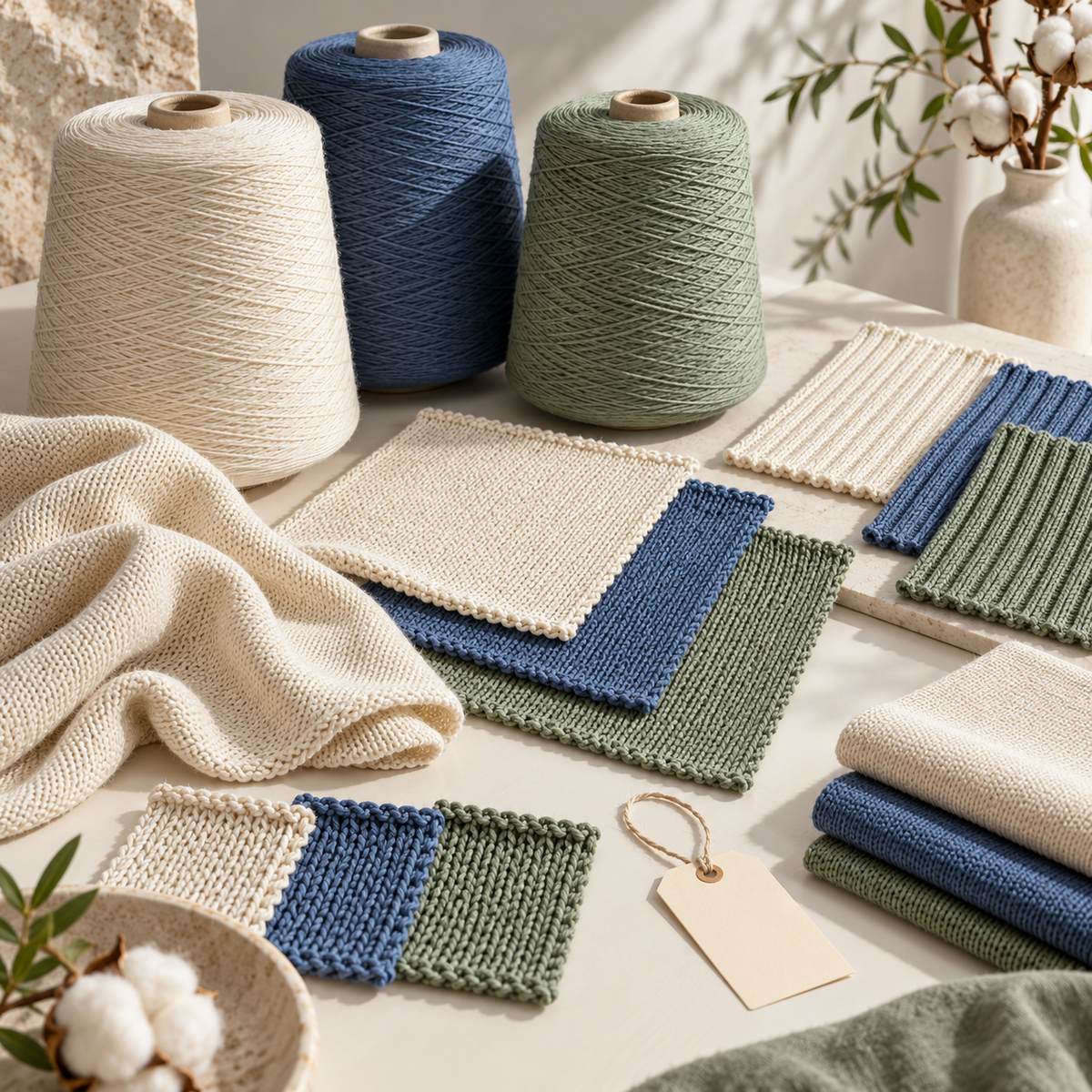
The cover is an editorial textile study. Product photographs below show the actual catalogue references discussed in this guide.
For a fine-gauge cotton polo or light cardigan, approve the yarn through the finished swatch. A colour card helps you choose a shade; a knitted panel shows how the selected count, ply and finishing route work together. The useful buying decision is specific: which cotton yarn produces the fabric your garment needs after the agreed treatment?
There is a practical reason to refresh older test briefs for 2027 development. AATCC's announcement of 26 November 2025 lists revisions to its laundering-related methods for the 2026 manual, including directing TM135 users to Laboratory Procedure 1. Ask your testing team to record the method edition and procedure. Read AATCC's 2026 manual update.
Make the finished garment your starting point
Give the sampling team a fabric brief: garment type, intended weight range, opacity, surface appearance and care route. Include the proposed machine and stitch structure. A smooth polo body, its rib collar and a lightweight cardigan panel may need separate trials even when they use the same cotton selection.
Keep two decisions separate in the trial record: selecting the yarn and adjusting the knitting setup. Establish a workable setting for each candidate, then record it. A count label alone does not establish machine suitability, finished weight or a universal gauge recommendation.
Compare the actual count and ply options
Y100-000049 is a 100% cotton high-twist yarn selection. Its main cards cover 20S/2, 32S/2, 40S/2 and 60S/2; a mixed card adds smaller 40S/3 and 60S/3 panels. These are separate specifications to confirm, rather than interchangeable choices within one fixed yarn size.
When the supplier confirms English cotton count and the stated ply convention, the higher single-yarn number indicates a finer single yarn. Adding another ply changes the assembled yarn. CottonWorks explains these numbering and plying principles in its yarn-count reference. Use the following table to frame a trial, rather than assign a machine gauge.
| Card specification | Comparison to make | Finished-swatch decision |
|---|---|---|
| 20S/2 | Coarser nominal two-ply option in this group | Check coverage and weight against the garment brief. |
| 32S/2 | A finer two-ply candidate than 20S/2 | Compare opacity, stitch definition and handle. |
| 40S/2 | A further step in single-yarn fineness | Assess the fabric at its own recorded knitting setup. |
| 60S/2 | Finest nominal two-ply option listed here | Check knitting stability, coverage and finished dimensions. |
| 40S/3 | Three plies rather than two at the stated single count | Reassess fabric mass, thickness and movement. |
| 60S/3 | Finer singles assembled as three plies | Evaluate separately; matching a nominal size does not establish matching fabric behaviour. |

Turn “high-twist” into a testable request
Here, high-twist is the card description. The listing does not provide a measured twist level. If twist is central to the design, request its direction and turns per metre or inch for the confirmed yarn, then keep that specification with the swatch.
Assess surface clarity, handle and visible twisting or skew after finishing. A high-twist label does not establish an anti-pilling grade. If pilling performance matters, agree an appropriate fabric test, its conditions and the required result before bulk approval.

Run a finishing trial that the mill can repeat
CottonWorks' 16 January 2025 shrinkage workshop identifies construction, dyeing and finishing as connected parameters in knit-product performance. For buyers, that supports reviewing the complete development route rather than attributing every change to the yarn. See the workshop's technical scope.
- Label before knitting. Record the product, full count and ply, agreed shade, lot information and yarn handling instructions.
- Keep a knitting record. Note the machine, gauge, ends fed together, stitch settings and any processing interruptions. Keep an untreated reference panel.
- Agree the finish. Document washing, drying, softening and any mechanical treatment with the finishing team. Record the actual route used.
- Measure after the agreed rest period. Compare length, width, fabric mass and visible skew using consistent marking and measurement procedures.
- Review garment details. Include ribs, edges, seams and a representative garment trial before approving production.
Keep the finish identifiable. CottonWorks' 31 July 2025 overview describes performance changes created by specific cotton finishes. Those technologies are not established attributes of Y100-000049. The buying lesson is to ask which treatment the actual sample received before crediting a result to the fibre or count. Read the finishing overview.

Set acceptance criteria before the result arrives
The 2025 edition of AATCC TM135 covers fabric length and width change after home laundering. Its public scope describes different wash and dry conditions. A report therefore needs the selected procedure and cycle count, alongside the measured results. Agree the pass criteria with your technical team; there is no universal shrinkage allowance supplied by this yarn listing. Check the official method description.
Approve the finished fabric against your brief, including appearance and handle. Keep the approved swatch, its finishing record and a garment reference together. If the count, lot, construction or finish changes, decide which checks must be repeated.

Confirm one specification before buying the sample
Contact zncainan@gmail.com or our customer service team with Y100-000049, the required count and ply, the complete shade reference and your intended knitting use. Confirm availability before ordering. For example, retain F001 exactly if that is the agreed reference.
After confirmation, enter the agreed reference in the product's Colour reference field and repeat it in the order note. Preserve every prefix, suffix and leading zero. The minimum purchase is one individually packed 1kg sample at US$19.90; confirm the applicable shipping charge at checkout. Evaluate its colour, material and finished swatch, then contact us for a bulk quotation. Bulk pricing is quoted against the confirmed specification and order quantity.
Questions buyers ask
Which count should I choose for a fine-gauge cotton polo?
Share the machine, structure, target fabric weight and opacity with your sampling team. Compare suitable candidates from the listed range through finishing. A count-to-gauge chart cannot approve this yarn on your machine.
Can I replace 40S/2 with 60S/3?
They can be close in nominal assembled size under the confirmed English-count convention, but use different singles and ply construction. Confirm the full specification and trial the proposed replacement at recorded settings.
Does high-twist mean the cotton will not pill?
It does not establish a tested pilling result. Request relevant evidence or arrange the agreed fabric test. Keep its method, conditions and result with the finished sample.
Can I order a colour from any card under the same count?
Confirm the specific card, count, ply and shade together. Y100-000049 combines several specifications, so the product reference alone is insufficient. Preserve the confirmed code in the Colour reference field and order note.