
Research updated 28 October 2026 · Knitwear material development
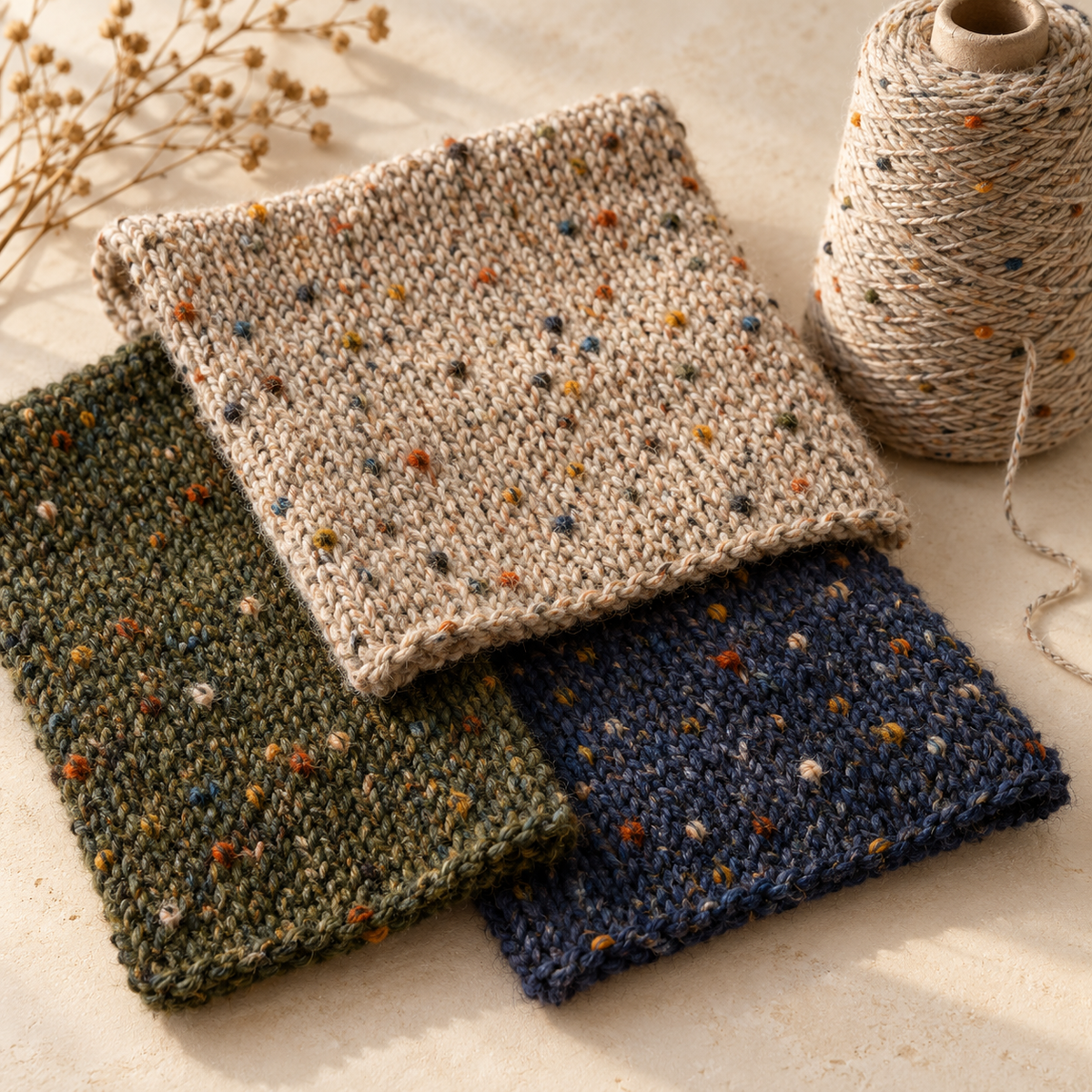
The cover is an editorial textile study. Product photographs below show the actual catalogue references discussed in this guide.
A flecked yarn can look restrained on one base colour and conspicuous on another. A small wrapped sample may also suggest a different balance of colour from a complete knitted panel. For buyers developing nepped or tweed-effect knitwear, the useful question is how to describe that appearance clearly enough to assess it again.
There is current collection interest in this direction: Pecci Filati's June 2026 release includes tweed-effect wool developments for AW27/28. See the manufacturer's collection release. A useful sampling brief turns the visual idea into three separate decisions: fleck scale, base-to-fleck contrast and an agreed method for comparing the finished fabric.
Define the effect before approving the colour
“Tweed-effect” is a broad visual description. Première Vision's yarn glossary, dated 2 April 2024, describes tweedy fabrics through yarns with irregular colour and diameter across several constructions. The label therefore needs a more precise yarn specification alongside it. Read the glossary's yarn and fabric distinctions.
Decorative neps also have a technical background. Cotton Incorporated describes knickerbocker or nepp yarns with contrasting fibre clusters introduced during blending or late carding. Its reference also distinguishes fleck and marl effects. These are examples of construction methods, not evidence of how every flecked yarn was made. Ask the supplier which description applies to your selection. See the technical definitions in Textile Yarns, pages 30–31.

Separate fleck size from fleck frequency
A fabric with many tiny points can read differently from one with fewer prominent flecks. Describe both characteristics. For size, keep a close physical reference showing the range you accept. For frequency, compare a consistent area of finished fabric. Avoid approving the whole effect from the largest visible fleck in one photograph.
Agree what the team will count as a visible fleck. A fine colour trace, a distinct point and a larger cluster may need separate descriptions. If measurement matters, document the inspection rule and tools. There is no numerical fleck-size or frequency specification established for the catalogue selection shown here.
| Variable | Record in the sample brief | Compare during approval |
|---|---|---|
| Fleck scale | Physical examples of acceptable small and prominent flecks | The range across several areas of the panel |
| Fleck frequency | Inspection area and a shared counting or visual rule | Distribution across equivalent finished areas |
| Base colour | Complete shade code and approved physical sample | The base and fleck colours under consistent lighting |
| Knitted structure | Machine, count, stitch, settings and finished dimensions | Visibility of the effect in the intended construction |
| Finishing | Agreed washing, drying and finishing procedure | Appearance and dimensions after that procedure |

Approve the base colour with its flecks
Shortlist the complete combination. When reviewing a darker base, check which fleck colours remain visible; on a lighter base, check whether the same accents dominate the intended look. Place candidate swatches side by side under consistent lighting and inspect them both close up and at garment-viewing distance.
Record both decisions: the background shade and the accent palette. “Grey with coloured flecks” leaves considerable room for interpretation. Attach the physical approval swatch to the sample record, supported by a photograph with a scale reference. Use photography for communication while keeping the physical yarn and fabric as the approval references.

Choose one specification within Y100-000036
The Colour-Nepped Wool-Blend Yarn Selection brings together several distinct groups. It is a selection for discussing a particular sample, with different compositions and count information across its cards. Some fibre details are incomplete. Confirm the complete composition, count and shade for one group before payment.
For example, the B-group card above and the 20W card identify different blends. The T-group card below lists another: 30% Wool, 30% Nylon and 40% Acrylic, with 1/16 count notation. Keep the group prefix with the full shade code. Other pages need their own specification checks; a shared product reference does not establish one universal formula.

Make the sampling review repeatable
1. Freeze the trial specification
Label the yarn with its product reference, card group, complete shade, composition and confirmed count. Record the machine, stitch and settings. Begin with a construction that lets the team inspect the flecks clearly, then compare the intended garment structure. Document any setting changes between trials.
2. Inspect more than one area
Mark equivalent windows on the finished panel, such as agreed 10cm squares, and review several positions. Record the balance of small points and larger accents, obvious clusters and quieter areas. This is a proposed internal comparison method, not a recognised test standard or a promised tolerance for this yarn.
3. Recheck after finishing
Apply the intended care and finishing process, then measure the panel again. Compare fleck visibility, surface and colour balance using equivalent finished areas. Keep an untreated reference beside the processed sample. Document the result the team is approving, including dimensions and treatment, so a later trial can follow the same procedure.
4. Separate appearance approval from quality testing
Uster's October 2025 bulletin treats yarn irregularity as a quality-management subject. An attractive decorative effect does not answer every processing or quality question. Read Uster's bulletin on yarn irregularity. Agree any required tests with the supplier and knitter for the actual yarn and fabric. Keep the visual approval and technical acceptance criteria together when discussing bulk supply.
Frequently asked questions
Are nepped and melange yarns the same?
The terms describe different aspects of appearance. Ask whether the effect is a blended background, distinct coloured spots or a combination. A physical reference makes that distinction clearer than a name alone.
Can a colour-card photograph establish fleck size?
Use it to shortlist. A photograph without a reliable scale and consistent capture conditions is a weak measurement reference. Assess the physical yarn and a recorded knitted trial.
Should every panel show identical fleck placement?
Agree the required overall appearance with the supplier. Assess distribution across several areas and discuss acceptable variation; do not assume individually positioned flecks will repeat from the colour-card image.
Does one product reference mean one blend?
Not for this selection. Y100-000036 contains several card groups, including incomplete specifications. Confirm one complete specification and full shade code before ordering.
Turn the visual brief into a sample order
A le Charchell 1kg evaluation sample is US$19.90 for checking the confirmed colour and material. Contact customer service first with Y100-000036, the relevant card image and complete shade code. After specification and availability confirmation, enter the agreed reference in Colour reference and repeat it in the order note, preserving prefixes and leading zeros. Review the sample and knitting trial, then contact us for a separate bulk quotation based on the specification and quantity.