
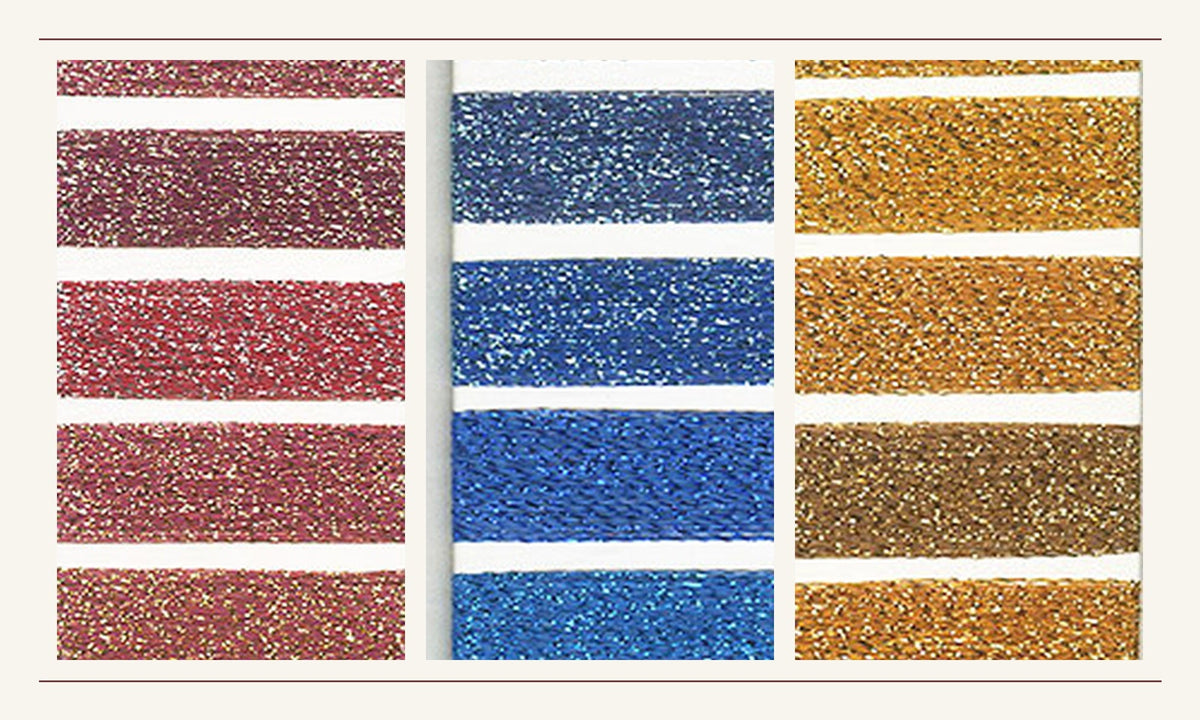
A metallic cardigan can look restrained on a hanger and brilliant in motion. A sequin yarn can change the character of a simple knitted panel. For a knitwear buyer, the useful question is how that effect survives the route from cone to finished garment. This guide explains how to compare metallic, sparkle and sequin yarns, plan a controlled mill trial, and agree a clear approval standard before committing to bulk.
Open any article image to view it at full size.
Why sparkle deserves a place in the development brief
There are current supplier signals worth investigating. In its Spring/Summer 2027 collection account, Industria Italiana Filati includes contemporary sequins and luminous structures among its design directions. Separately, the organiser’s July 2026 Feel the Contest report describes a winning knitwear look with gold sequins applied to a bolero. That second example concerns garment decoration, rather than a particular yarn construction.
Together, these are useful design signals for development meetings. They establish neither sales demand nor the suitability of a yarn for your machine. Translate the inspiration into a specific placement: an all-over surface, a restrained stripe, a neckline detail or a separate occasionwear panel. Each deserves its own sample decision.
Start with construction, then compare the shine
“Sparkle” describes an appearance. Your technical brief also needs the structure creating it. Lurex describes unsupported yarn as slit film without supporting yarns; its supported range uses double covering. These are examples from that manufacturer, and do not identify the construction or brand of a le Charchell reference.
| Route | What to clarify | First comparison to request |
|---|---|---|
| Unsupported metallic film | Film specification, width and intended application | A confirmed construction suitable for the proposed use |
| Supported metallic yarn | Supporting fibres, construction and final count | Finished panels judged for both effect and handle |
| Sparkle within a blended yarn | Complete composition and how the effect is incorporated | The exact series and shade, with its intended base yarn |
| Sequin-bearing yarn | Sequin size, spacing, attachment and yarn specification | A panel showing the face, reverse, seams and edges |

Construction can influence the result. In a 2020 SSM machinery article, pages 15–16, metallic-coated thread is combined with polyester or polyamide filaments through air covering. SSM describes protection and handle benefits for that process. Treat this as a reason to ask about construction; it is no guarantee that another metallic yarn shares those properties.
A sampling plan that answers a buying decision
The following is our suggested development workflow. It is an editorial framework for buyer and mill discussions, rather than a machine recipe or a laboratory test standard. The mill and yarn supplier should agree settings and suitable tests for the exact reference.
1. Define the effect and its location
Give the sampling team one approved visual reference and a short description: scattered points of light, a fine continuous shimmer, or a stronger reflective surface. Specify which garment areas carry the effect and which touch the skin. Name the intended base yarn, stitch structure, machine and gauge. Record the customer’s target handle, garment weight and care expectations as requirements to validate.
2. Identify every trial material
Write the product code, card series, shade code, count, composition and available lot information on the trial sheet. Keep a small labelled yarn reference. If the card omits a detail, request confirmation before treating it as settled. A photograph of several cards is a selection to investigate; it should not be interpreted as one interchangeable specification.
3. Change one development variable at a time
Begin with a base-only control panel. Add the chosen effect in the proposed construction, then make one clearly identified alternative: for example, a different placement or a second confirmed effect yarn. Keep the other agreed conditions consistent so the comparison remains useful. Record every deliberate change. Let the technician decide safe feeding arrangements and machine settings.

4. Keep matched panels before and after finishing
Retain an unfinished reference and finish its matched sample using the supplier-approved route. Record the actual process. Compare dimensions, weight, handle and visible effect under the same viewing conditions. Be.Mi.Va’s Glitter/Glitter Unito technical sheet specifically notes that colour and stitch can affect shrinkage, and calls for checks before production. Its treatment instructions belong to its own yarns; obtain instructions for your selected reference.
5. Move from panel to garment details
Ask for a small construction sample containing the proposed seam, neckline or cuff. Check the reverse and contact areas as carefully as the face. Agree a viewing distance and lighting setup, and photograph the same areas before and after the trial. A close-up records detail; a wider image records how much sparkle the wearer will actually see.
Use the symptom to choose the next check
The effect is weaker than expected. Compare the same panel under the agreed light before changing yarns. Then review effect placement, the base colour and which side of the fabric is being presented. Make one revised panel and label the change.
The surface feels uncomfortable. Identify where contact occurs: fabric face, reverse, seam or edge. Compare finished samples and discuss a different construction or effect placement with the supplier. A soft-looking photograph cannot settle a skin-contact requirement.
Feeding stops or visible damage appear. Keep the affected yarn and panel, and record the machine position, stage and frequency. Have the technician inspect the yarn path and handling, then involve the supplier. Changing several settings together makes the cause harder to isolate.
The finished sample changes unexpectedly. Check the recorded finishing route, shade and stitch against the approved trial. Discuss the evidence before repeating the process. Keep development observations separate from any formal pass/fail test results.
Two catalogue selections, with distinct specifications
Y100-000011: metallic AK, H and SX references
The AK, H & SX metallic yarn selection contains several card groups. The AK cards state 27% Metallic (polyester film) / 73% Polyester, 110D. That information applies to AK. Confirm the composition and count of H or SX separately. “Metallic” here should not be read as a declaration of pure-metal content, or as proof of a branded Lurex product.

Y100-000018: classic, sparkle and sequin groups
The classic, sparkle and sequin yarn selection also contains different specifications. Its BD group is listed at 2/45NM with 6% wool. The Y-series sparkle cards show 1/20NM and 6% wool; request the complete composition. The K-series sequin blend lists 4.7% Wool / 46.1% Polyester / 22.6% Acrylic / 22.1% Nylon / 4.5% Metallic Filament; confirm its count. Use the series heading to identify your choice, rather than assuming every card shares one blend.

Make the approval usable on the production floor
Create a release sheet linking the approved finished panel to its yarn reference, shade, lot information, base yarn, machine setup and finishing record. Add photographs of the accepted appearance, plus agreed tolerances and required test results. Record who approved it and when.
Ask the mill to record consumption and development waste before costing bulk. Agree what happens if the yarn specification, shade lot, stitch or finish changes. Keep a signed physical reference available to the buyer, sampling room and production team. This makes a later comparison specific enough to resolve.

Frequently asked questions
Can I select metallic yarn by colour alone?
Use colour to shortlist. Confirm construction, count, composition and intended application before asking the mill to develop a panel.
Which machine gauge should I use?
Ask the mill and supplier to agree a starting point for the exact yarn, combination and stitch. These catalogue selections contain multiple specifications, so one gauge recommendation would be misleading.
Can I apply an existing garment’s care label?
Validate the proposed care claim on the finished construction. Obtain the selected yarn’s guidance and agree relevant testing with the mill or laboratory before releasing the label.
Does a sample order reserve my bulk shade?
Confirm bulk shade availability, lot arrangements and lead time separately with customer service. Include the approved specification and expected quantity in your enquiry.
Start with a confirmed sample reference
le Charchell samples start at 1kg for US$19.90. Before ordering, contact our team or email zncainan@gmail.com to confirm the card series, shade code, specification and availability. Use the sample to assess colour, material and development suitability. Once confirmed, send your bulk quantity for a tailored quotation.
Shipping is quoted separately. After confirming your shade with our team, include the confirmed shade code in your order notes so we can prepare the correct sample.
Sources and further reading
Research checked on 25 October 2026. The trial worksheets and purchasing workflows in this article are original editorial guidance.
- Industria Italiana Filati: Building the SS 2027 Collection
- Feel The Yarn / Consorzio Promozione Filati: Creativity unites with color
- Lurex: Unsupported Yarn
- Lurex: Supported Yarn
- SSM / Rieter: Shiny and Fancy Effects, Spinnovation No. 35, July 2020, pages 15-16
- Filati Be.Mi.Va.: Glitter / Glitter Unito technical sheet, revision 2504