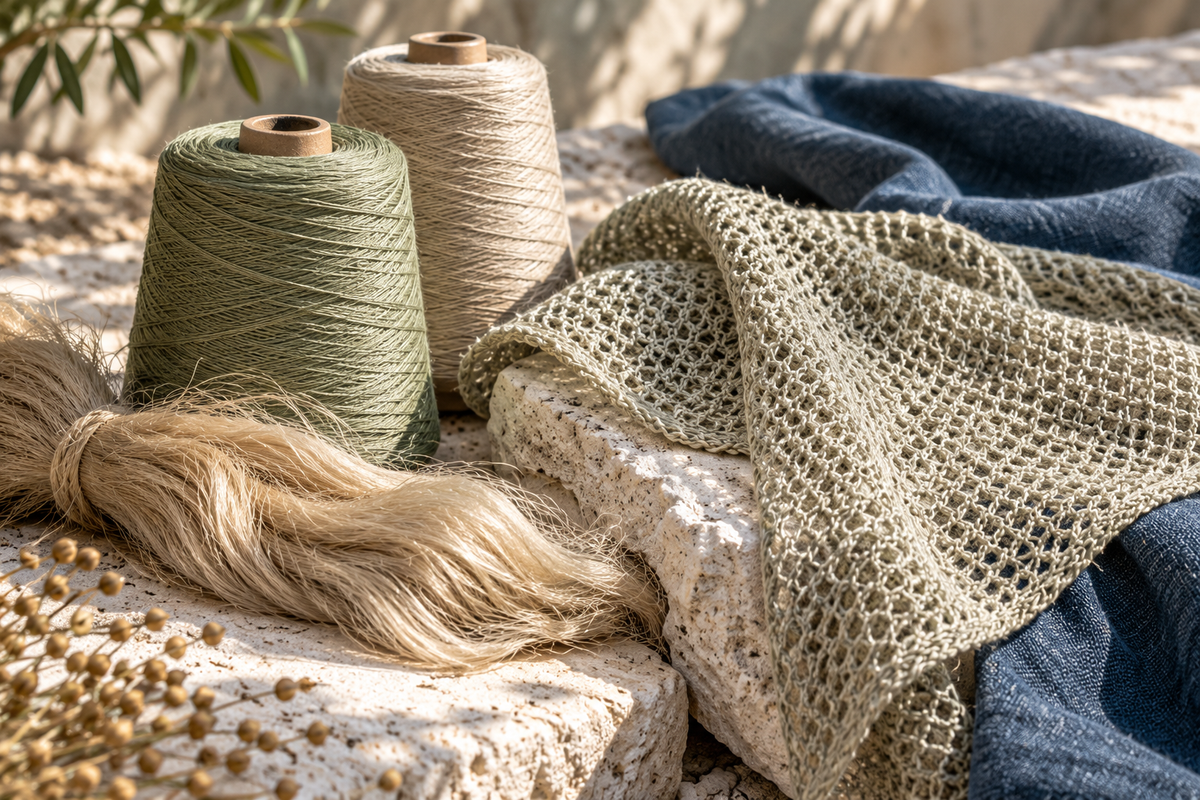
Imagine a summer knit hanging beside an open window. The stitch has space around it, the colour changes gently in the light, and the surface carries a little irregularity. Turning that image into a yarn brief begins with identifying which of those details matters most to your design.
Linen is often part of that conversation. Before choosing a reference, decide whether you want the look of a textured surface, a particular drape, or a specific fibre composition. Those are separate choices, and writing them down helps a supplier understand the fabric you hope to make.
Start with a short material note
Linen comes from flax. The CFDA material guide describes flax fibre as strong and relatively stiff, with natural lustre and characteristic irregular texture. That combination makes it useful to consider both surface appearance and handle when evaluating a linen yarn or blend.
A general fibre guide is background reading. The composition, yarn construction and finished sample for your exact reference remain the information to use for a purchasing decision. Avoid assuming that two listings with “linen” in their names will produce the same result.

Describe the summer garment in concrete terms
A fine cardigan, an open stitch top and a relaxed knitted vest can all begin with very different briefs. Write down where the piece will be worn, whether it sits against the skin, and how much visual openness you want in the stitch. Add an approximate fabric weight target if your technical team has one.
When you use a mood image, name the feature you are borrowing from it. You might want the fall of the hem or the way a pale shade reveals the stitch. That explanation helps separate an achievable material direction from unrelated styling in the photograph.
| Design priority | Sample observation |
|---|---|
| Surface character | Look at the yarn and knitted stitch in the same light. |
| Drape | Let the finished swatch hang as well as examining it flat. |
| Colour | Keep the shade code with an approved physical reference. |
| Comfort | Evaluate the finished sample for its intended contact area. |
| Repeatability | Record the reference, construction and finishing notes. |
Read the complete blend
On a collection page, a fibre family helps narrow the search. On a product page, the full composition should lead the comparison. Note every component and its stated proportion, then ask what you need to know about the yarn construction. If a detail is unclear, resolve it before the sample is approved.
Compare options against the same design brief instead of treating one fibre percentage as a universal quality score. The useful question is which finished fabric best serves this project. Keep the selection tied to an approved sample and the actual product reference.
Give finishing its own place in the trial
Ask the sampling team how the knitted trial should be finished and handled. Photograph and label the sample at the points your team needs to compare. Record dimensions, fabric weight where measured, and observations about the surface. If the finishing method changes, update the record so the approval remains understandable.
Discuss care requirements early with the people responsible for the garment. A yarn name or fibre family does not replace finished-product assessment. If the collection has a specific test requirement, define the method and acceptance criteria with the relevant technical team before production.
Bring the palette back to a physical reference
Summer palettes often depend on small differences between nearby shades. View the selected colour references together and keep their codes visible. Use photographs to communicate the direction, then agree the physical reference that will be used for approval. Store the final decision beside the sample notes rather than in a separate message thread.
A summer yarn enquiry, ready to send
- The garment and intended stitch or construction
- The complete composition you are considering
- The product and colour references
- Your desired handle, drape and surface appearance
- The sample setup and finishing questions
- The quantity, delivery destination and required timing
Explore our Linen & Ramie collection to begin a shortlist. Linen and ramie are separate fibre names, so check the exact composition on each product. Send your selected reference and project details through our wholesale enquiry page when you are ready to discuss the next step.
Compare actual yarn references
Use the photographs below to connect this guide with a specific product code and card. Each page records the available specification and any details that need confirmation.


Contact us to confirm the exact yarn, complete shade code and availability before checkout. One confirmed, individually packed 1kg sample is US$19.90, with shipping additional. Evaluate the physical yarn before discussing a quantity-based bulk quotation.
Sources & further reading
Council of Fashion Designers of America — Fiber Guide: Flax (Linen) (accessed 23 October 2026).
Industry sources inform the short fibre and terminology notes above. The sourcing workflow and checklists are le Charchell editorial guidance. Illustrations are created for this journal and do not represent specific stock, laboratory results or certifications.