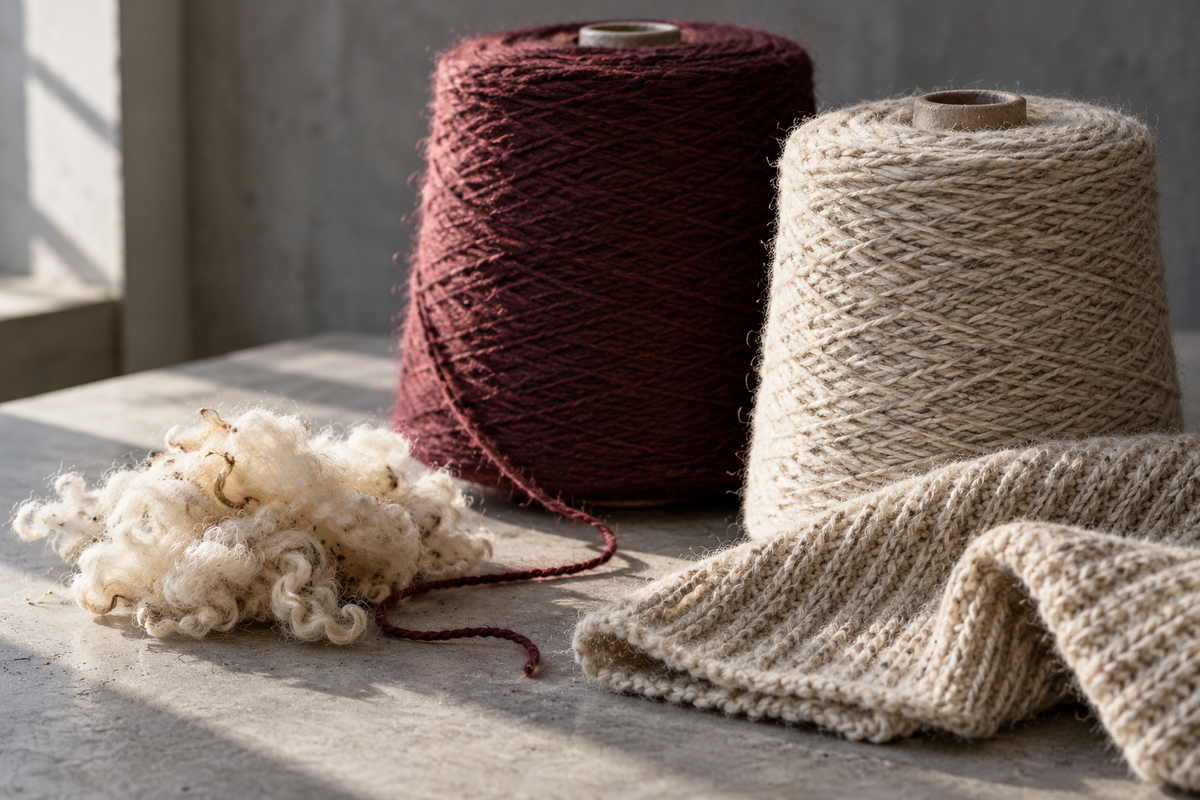
A wool yarn can look quiet on a cone and feel completely different once it becomes a fabric. The first useful question is often about the piece you want to make: a scarf worn against the neck, a cardigan with a defined shoulder, or a light layer that needs to fold into a bag. Each asks something different of the material.
For a wholesale buyer, that starting point makes the next conversation more precise. Instead of asking for a universally “good wool”, describe the handle, weight and appearance you want to approve. Keep the supplier reference with every sample so the fabric you like can be traced back to the yarn that produced it.
What the fibre can tell you
Wool has a naturally wavy structure called crimp. Woolmark explains that this structure contributes to elasticity and helps trap air. Fibre diameter also matters to comfort: finer fibres bend more readily against the skin. These are useful starting points when considering wool for knitwear, but a fibre description alone does not establish how a particular yarn or finished garment will perform.
Read the full composition of a blend. A product with a wool component should be assessed as that stated blend. Ask which specifications are available for the exact reference, and distinguish a general fibre explanation from a tested claim about the product you are purchasing.

Begin with an end-use brief
Write a few concrete sentences before requesting samples. “A light scarf for direct skin contact, with a soft surface and a fluid fall” gives a supplier more direction than “luxury wool”. For a structured cardigan, describe the intended silhouette and the stitch definition you want. Add a reference photograph only when you can explain which feature matters.
| End-use question | What to record |
|---|---|
| Where will the fabric touch the wearer? | Collar, neck, wrist or an outer layer; note the desired handle. |
| What shape should the piece hold? | A relaxed drape, a defined rib, or a more structured surface. |
| How will the sample be made? | Machine, gauge, stitch construction and finishing method. |
| What must be approved? | Colour, dimensions, fabric weight, appearance and care brief. |
Compare finished swatches fairly
Make the comparison useful by holding the sampling conditions as steady as possible. Label each swatch with its yarn reference, date, construction and finishing notes. If the knitting team changes a setting, record that change rather than treating the new fabric as a direct replacement for the previous test.
Place the samples side by side. Look at the surface in the same light, handle them in the same order, and describe the difference in plain language. Does one feel fuller? Does another show the stitch more clearly? These observations help narrow the brief without turning a personal preference into an unsupported technical claim.
Turn preferences into an approval record
Once a sample is selected, photograph it and retain a physical reference. Agree who approves colour and who approves the knitted result. Keep commercial details in the same file: the exact product code, order quantity, price basis and any shipping quotation. A familiar-looking shade on a screen is a useful reminder, but the approved physical reference should remain easy to find.
For repeat orders, bring that record back into the conversation. Ask the supplier to confirm the current reference and availability rather than assuming a previous order guarantees identical terms. If your project requires testing, specify the method and acceptance criteria with the responsible testing or production team.
Before requesting a wool yarn sample
- Describe the garment, handle and intended construction.
- Confirm the complete fibre composition and yarn reference.
- Label the swatch and document the finishing method.
- Set out the colour and fabric approval process.
- Confirm quantity, lead time and shipping terms for this order.
At le Charchell, you can start with the Wool & Cashmere collection and send the reference with your project brief through our wholesale enquiry page. Collection membership is a browsing aid; the individual product specification is the place to check the composition.
Compare actual yarn references
Use the photographs below to connect this guide with a specific product code and card. Each page records the available specification and any details that need confirmation.


Contact us to confirm the exact yarn, complete shade code and availability before checkout. One confirmed, individually packed 1kg sample is US$19.90, with shipping additional. Evaluate the physical yarn before discussing a quantity-based bulk quotation.
Sources & further reading
The Woolmark Company — What is the Wool Fibre? (accessed 23 October 2026).
Industry sources inform the short fibre and terminology notes above. The sourcing workflow and checklists are le Charchell editorial guidance. Illustrations are created for this journal and do not represent specific stock, laboratory results or certifications.